California’s coast has seen a troubling number of seabirds struggling to survive, but hope is flying in too. Shifting ocean conditions make it harder for birds to find food, and in their search, they often take risks they normally wouldn’t, leaving them weakened and more likely to end up in dangerous situations, like becoming entangled in fishing line or stranded far from the coast.
In the past month, over 100 starving and injured birds, including Brown Pelicans, Common Murres, and Brandt’s Cormorants, have come into our care. Thanks to the swift response of the public and our team, many of these birds are now getting the care they need to recover and return to the wild.
Among these patients, a few stories stand out, birds who faced serious injuries or challenges and whose journeys remind us of the resilience of wildlife.
Triple Hook Survivor
Admitted from Manhattan Beach on March 28, this Brandt’s Cormorant arrived with three fish hooks causing serious injury. These injuries made it painful and difficult for the bird to eat, putting its life at risk.
One that was lodged alarmingly close to the right eye was removed from inside the mouth during its intake exam, and two more required careful surgery. One large hook had pierced deep inside the mouth near the throat, while another entered at the corner of the beak and tracked along the cheek. Now recovering in the large aviary, this patient is regaining strength each day as it heals.
A Lucky Escape
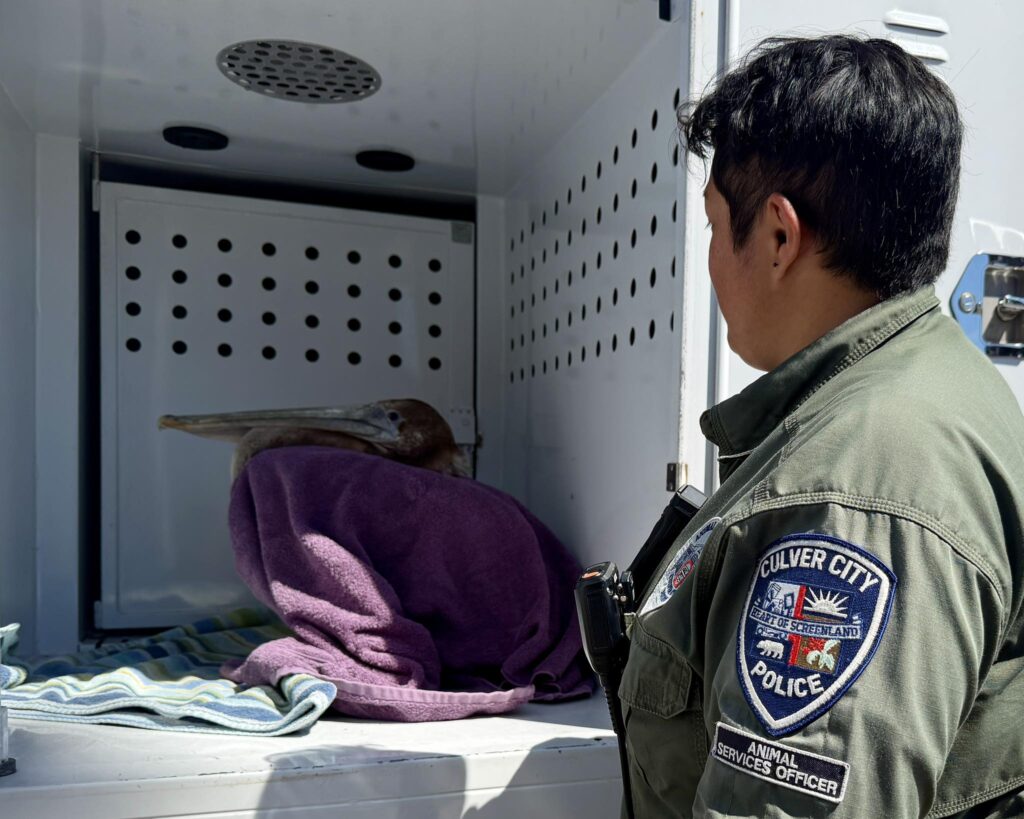
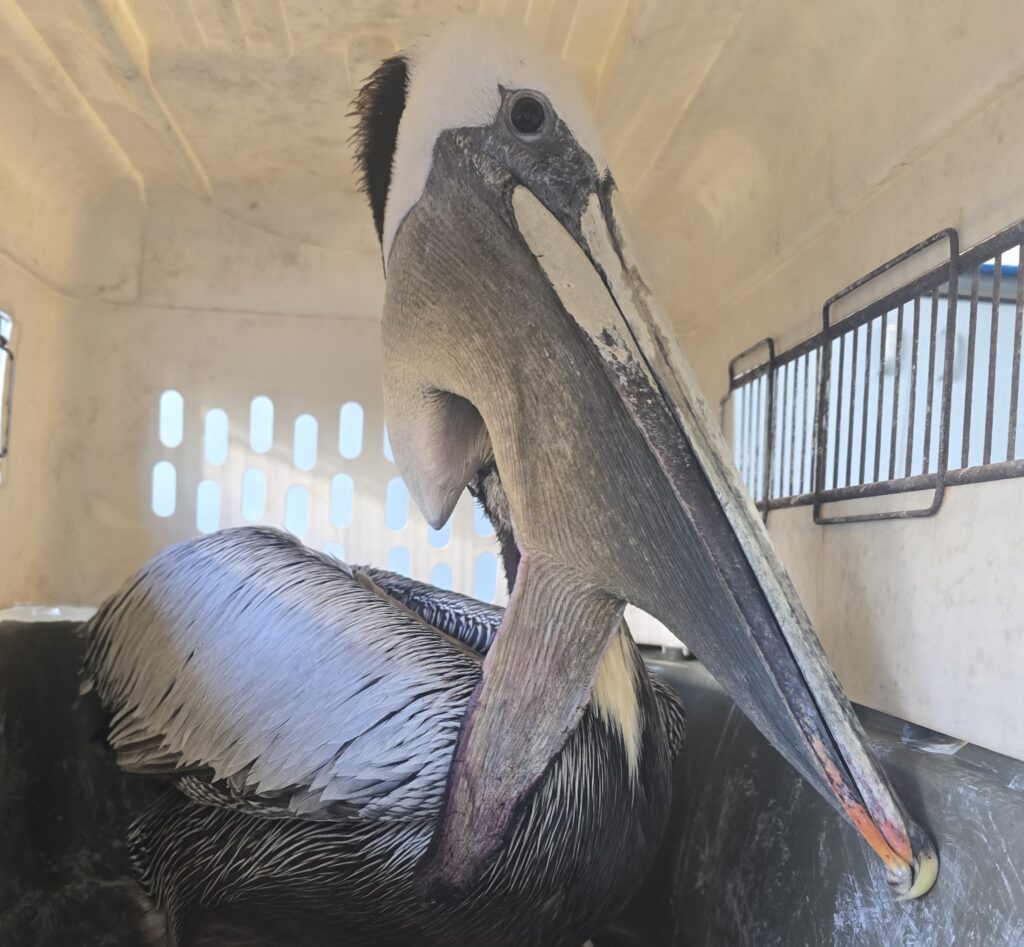
Rescued on St. Patrick’s Day along the 405 freeway by the Culver City Police Department, this Brown Pelican was found in a dangerous place, far from the water and in desperate need of help. Severely underweight and too weak to fend for itself, the bird was safely contained and transferred to our care.
Pouch Surgery Success
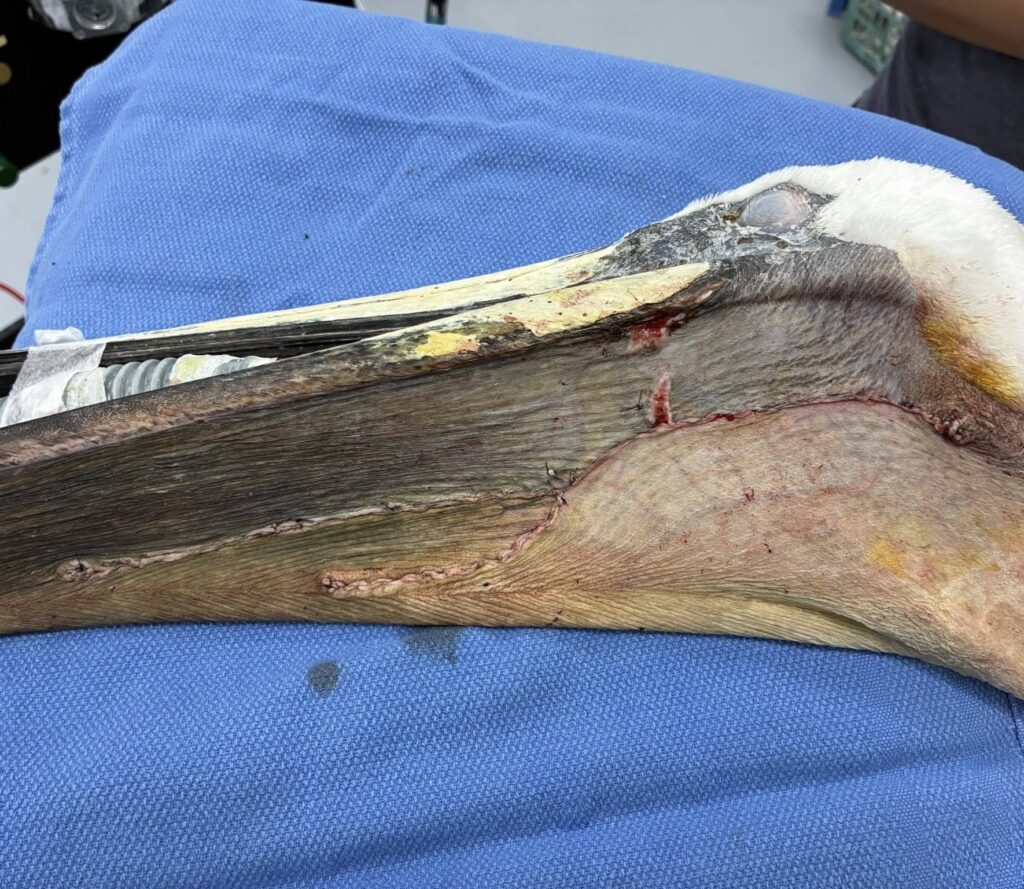
On March 19, a Brown Pelican was spotted at 22nd Street Landing in San Pedro, CA, with part of its pouch hanging loose, a serious injury that made it impossible to eat. Two of our staff members quickly rescued the bird and brought it in for care.
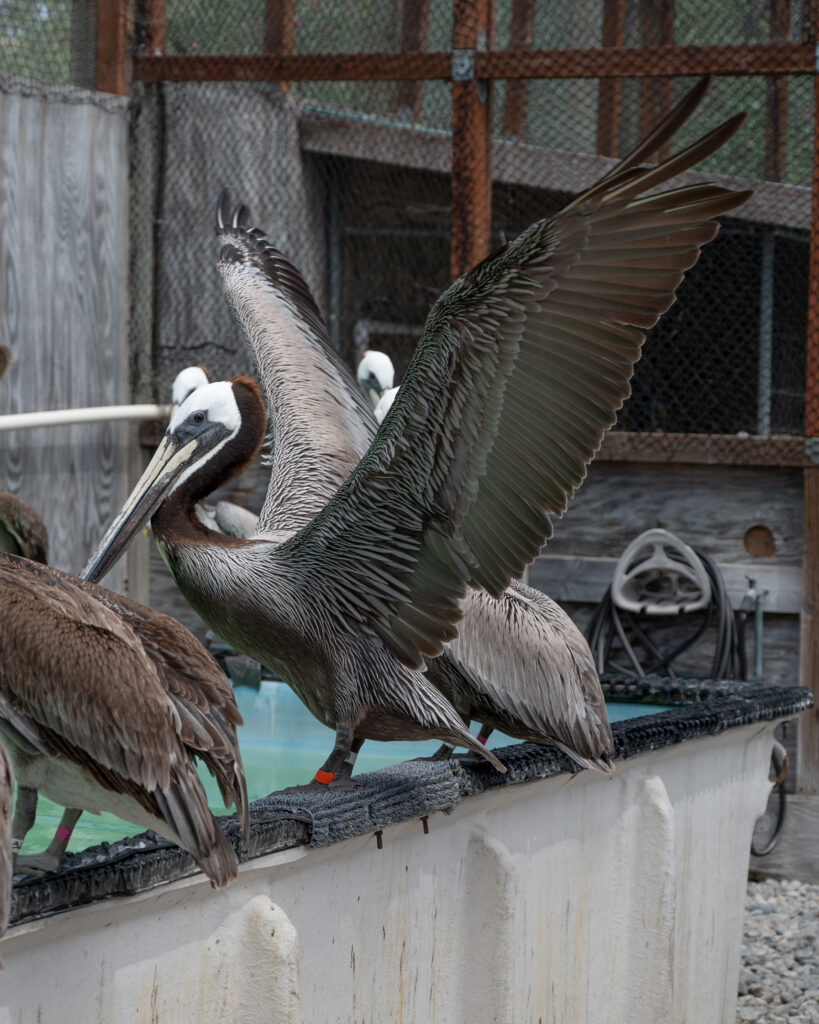
The pelican underwent a careful two-hour surgery to close the large hole in its pouch, likely caused by fishing gear. He had small meals for the first five days after surgery and is now recovering in an aviary alongside about a dozen other pelicans and is now enjoying as much fish as he wants.
Help Starts with a Call
If you come across a bird that appears weak, injured, or out of place, contact your local animal control, a licensed wildlife rehabilitator, or our Bird Rescue HelpLine at 866-SOS-BIRD (866-767-2473). Your quick action could be the reason a struggling bird gets the second chance it deserves.
Your support makes this work possible. Donate here to help provide the food, housing, and medical care these birds need to recover.