During the spring 2024 Brown Pelican stranding event, these seabirds resorted to a familiar behavior response to food scarcity: they took risks. However, this time, their hunger led them into dangerous situations, many involving fishing gear, resulting in more injuries than in previous crises.
Of the 373 patients admitted since mid-April, 182 of them have had medically-significant wounds. At least half of those pelicans have had injuries definitively known to be caused by recreational fishing gear hooks or lines. Another 92 have had other traumatic injuries of unknown cause (except for two that had sea lion bite wounds and one that was a victim of a gunshot).
Each of these injured seabirds required a tremendous amount of care. Even with our years of experience treating pelican wounds, the high volume of birds needing simultaneous care for multiple areas of trauma presented a particular challenge.

The birds with fishing gear injuries often have multiple injuries to different limbs. For example, there may be a hook lodged in the mouth, leg, wing, or in a random spot on the body, plus the attached fishing line may be tightly wrapped and constricting around one, two, three, or four(!) of the limbs, causing abscesses and infections, deep cuts to the tissue, and sometimes cutting off blood supply.
Brown Pelican LA-0602 had hook puncture wounds in his upper bill and foot, plus fishing line entanglement injuries to both wings. Ensuring that each and every one of these wounds gets the treatment needed to fully heal so that the bird is a fully functional athlete before release requires thoughtful attention – and a lot of bandaging supplies.
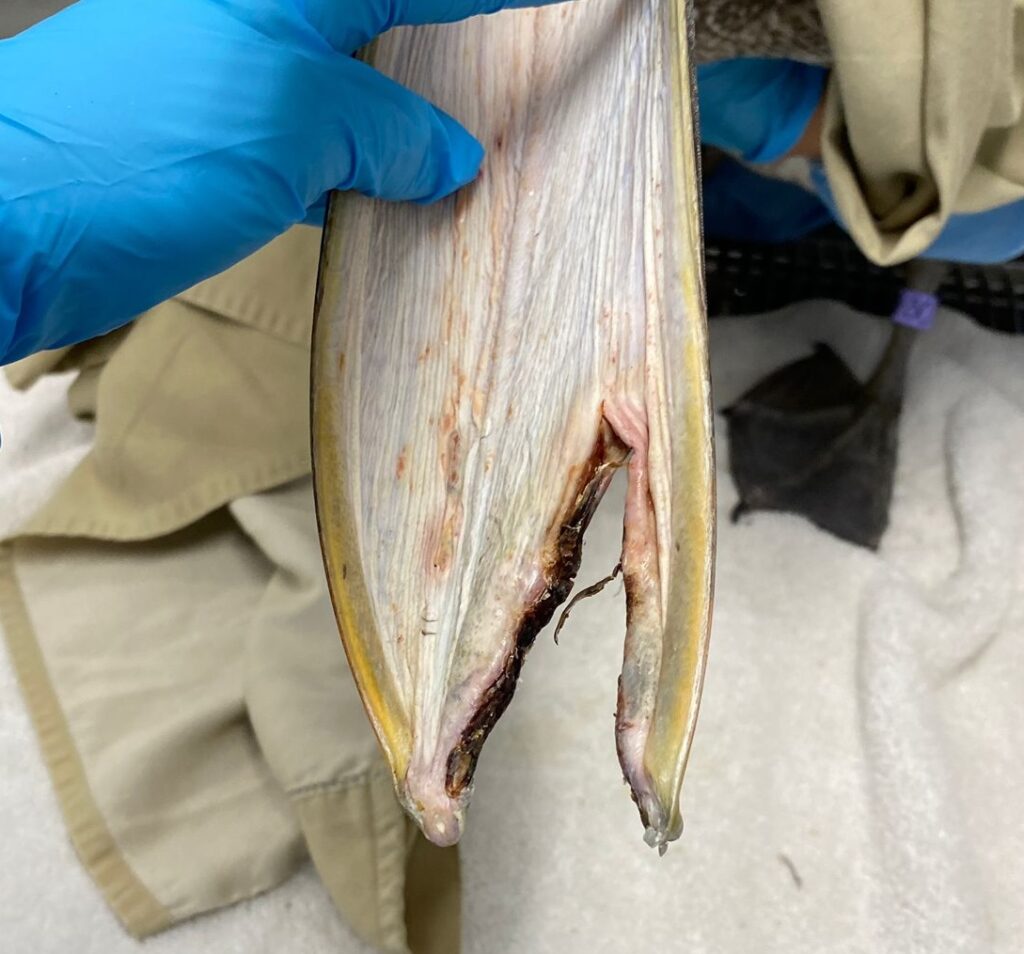
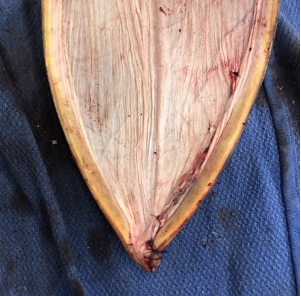
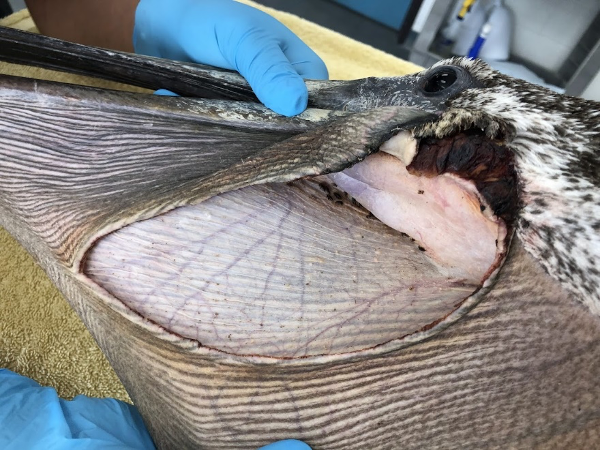
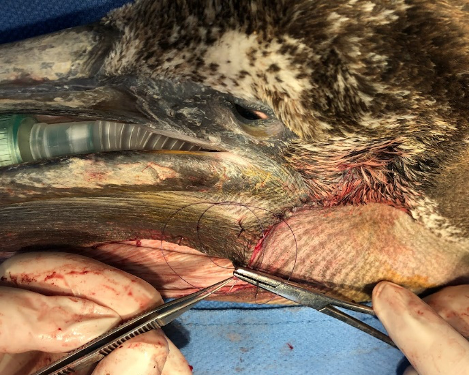
The most severely injured 48 of these birds have needed surgical procedures including seven of 13 birds with pouch lacerations. Brown Pelican LA-0630 even had the junction between the two sides of the mandible split open (the equivalent of a human’s jaw being broken apart in the middle). That is an uncommon injury, thankfully. Over the years, I have repaired only four or five of these, but the previous similar cases have healed well. This bird‘s wound came together pretty well, and I expect him to be in care for probably three months. Barring complications, by the time it’s done healing, it will look like nothing bad ever happened.