
Guest Posts
Part II: A Safer Future for Plovers
Our guest writer, Carleton Eyster, an Avian Ecologist with Point Blue Conservation Science, explains creative solutions to protect Western Snowy Plovers.

Our guest writer, Carleton Eyster, an Avian Ecologist with Point Blue Conservation Science, explains creative solutions to protect Western Snowy Plovers.
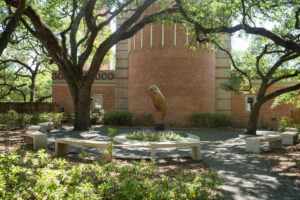
Rice University Environmental Management students take on real-world challenges to raise awareness about pressing environmental issues. This year, they tackled two topics that deeply impact birds: climate change and bird flu.

Our guest writer, Carleton Eyster, an Avian Ecologist, explains the restoration efforts making these wetlands safer for plovers and how collaboration across organizations is creating a brighter future for this at-risk species.
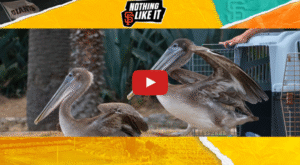
We’re excited to share that International Bird Rescue was featured in the Community Spotlight during last weekend’s San Francisco Giants game against the Los Angeles Dodgers!

With the excitement surrounding the release of the new Migration movie, we’d like to share some fun facts about Mallards and the other duck species we care for at International Bird Rescue.

June 23rd marks the 25th anniversary of the Merchant Vessel (MV) Treasure Spill – the largest and most successful wildlife emergency response in history.

Tending to landscape means making space for the local wildlife that depends on it. But when that wildlife is a group of industrious beavers determined to turn your water management system into their dream pond, things get a little more complicated.

Eight Double-crested Cormorants, who arrived in our care as a mix of eggs and newly hatched chicks, have officially been raised to be wild birds and released back to nature.

Brown Pelicans aren’t just striking symbols of the California shoreline – they’re powerful bioindicators, meaning their health reflects the health of the marine ecosystems we all depend on.

Once small enough to find reassurance beside their stand-in parent, the Western Snowy Plover chicks now tower over it – a sweet sign of how quickly they grow under expert care.
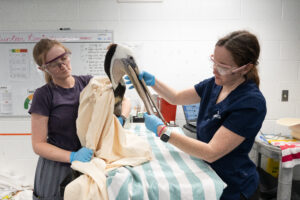
More than 90 seabirds have been brought into International Bird Rescue’s care since March exhibiting signs of domoic acid toxicity – a naturally occurring neurotoxin produced by a Harmful Algal Bloom (HAB) affecting the ocean off Southern California.

Over 100 young Brown Pelicans have been admitted with starvation concerns to International Bird Rescue’s two California wildlife centers over the past month.

For Jennifer Martines, Senior Wildlife Rehabilitation Technician at International Bird Rescue, a love for animals has always been a driving force – something she pursued far from the spotlight. That changed when her work caught the eye of Kelly Clarkson.
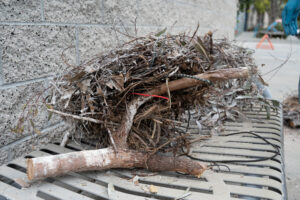
At first glance, a bird’s nest might seem like a perfect symbol of the natural world. But look a little closer, and you’ll find something far more unsettling: trash.

Over 40 starving young Brown Pelicans have been admitted to International Bird Rescue in the last few weeks – most at the Los Angeles Wildlife Center, with a few arriving at the Northern California facility.

During Women’s History Month, we celebrate the incredible women at the heart of International Bird Rescue.

More than three decades after the Exxon Valdez oil spill on March 24, 1989, oiled wildlife response has advanced dramatically—thanks in part to International Bird Rescue.
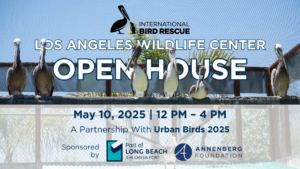
This year, Bird Rescue’s Open House is part of Urban Birds 2025, a partnership with Angels Gate Cultural Center and Synchromy Music to celebrate the intersection of art and science in wildlife conservation.